From Burundi’s representation at the international organisations in Vienna to a Hungarian criminal case involving the alleged sale of access to diplomatic appointments, the story of János Bocsánczy raises serious questions about how he was selected, vetted, accredited and retained in a sensitive international position.
Those questions concern institutional responsibility. They do not, on the presently available evidence, establish criminal or personal complicity on the part of Édouard Bizimana or any other Burundian official.
What they do establish is a compelling case for documentary transparency.
Bocsánczy Was Representing Burundi by 2015
Official records from the International Atomic Energy Agency show that János Bocsánczy was already serving as Burundi’s ambassador and resident representative to the IAEA in September 2015.
The Agency’s participant lists identify him in the same role in 2016 and in subsequent years. In September 2022, he was listed as Burundi’s ambassador, resident representative and governor on the IAEA Board of Governors.
These documents confirm his official status. They do not explain how he obtained it.
The unanswered questions therefore begin before the Hungarian criminal proceedings:
Who nominated Bocsánczy? Which Burundian authority approved the appointment? What professional, diplomatic, linguistic and security checks were conducted? What mandate was he given, and which institution supervised his activities?
The IAEA records establish that he represented Burundi. They do not disclose the internal process that placed him there.
The Hungarian Criminal Proceedings
Hungarian media reported in October 2022 that Bocsánczy had been detained the previous month in connection with an alleged payment for an honorary consular position. The official Hungarian prosecutorial announcement issued in January 2024 did not publicly name the defendant, but Hungarian reporting identified him as Bocsánczy.
According to Hungary’s Central Investigating Chief Prosecutor’s Office, the defendant allegedly promised five foreign nationals that, in exchange for payment, he could use his connections with officials in African and Oceanian countries to obtain honorary consular or special-envoy positions for them.
Prosecutors alleged that two of the five individuals obtained the requested positions and that the defendant received a total of €213,395 for arranging or attempting to arrange the appointments.
The prosecution described the alleged offence as influence peddling involving foreign public officials, committed partly through representations that bribes would be paid. It requested an immediate custodial sentence, a financial penalty and the confiscation of assets. The defendant had reportedly spent approximately ten months in pretrial detention before being placed under criminal supervision.
These were allegations contained in an indictment. An indictment is not a conviction.
No final judgment establishing Bocsánczy’s guilt should be reported unless the judgment itself, or an authoritative court announcement confirming its outcome, is obtained.
Édouard Bizimana’s Institutional Position
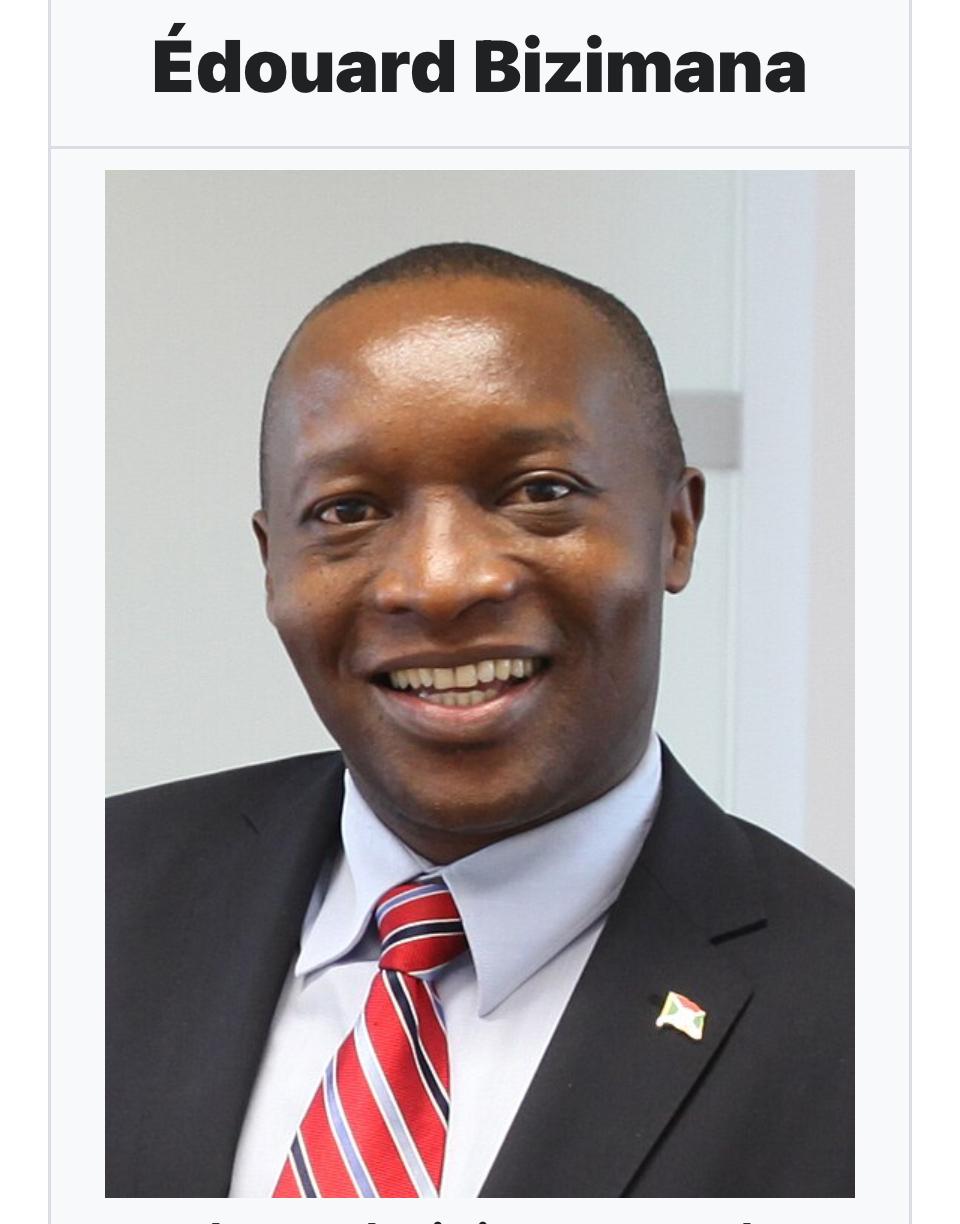
Édouard Bizimana is currently Burundi’s Minister of Foreign Affairs, Regional Integration and Development Cooperation. Burundi’s Foreign Ministry continued to identify him in that position in June and July 2026.
Public biographical records identify Bizimana as Burundi’s ambassador in Berlin between 2012 and 2016, during the period when Bocsánczy first appeared in official IAEA records as Burundi’s resident representative in Vienna. Those records also report that Bizimana held concurrent accreditation relating to Austria and the Vienna-based international organisations.
This temporal and institutional overlap makes Bizimana a legitimate person from whom to request clarification.
It does not, by itself, prove that he selected Bocsánczy, personally vetted him, signed his accreditation documents or knew of any alleged misconduct.
A diplomatic note reportedly connected to Bocsánczy’s accreditation is said to bear Bizimana’s signature. Until the original document is published and authenticated, however, that claim must remain expressly conditional.
If the note confirms Bizimana’s signature, date and institutional role, the public would be entitled to ask what information was available to him at the time, who requested the accreditation and what checks preceded his approval.
The Missing Chain of Appointment
The central issue is not whether one official can be blamed by association.
The issue is whether Burundi can reconstruct the complete administrative chain through which Bocsánczy acquired and maintained his international status.
That chain should include:
- The initial proposal or nomination.
- The appointing authority’s decision.
- The diplomatic note or credential transmitted to the relevant organisations.
- Any background, professional or security checks.
- The terms and duration of the appointment.
- The reporting and supervision arrangements.
- Any renewal, confirmation or expansion of his mandate.
- The date and grounds on which his accreditation ended or was withdrawn.
These are ordinary accountability questions. They become more urgent when the person concerned was later accused of monetising access to diplomatic and consular positions.
Claims That Still Require Evidence
Several assertions surrounding the case remain insufficiently documented.
One is the claim that Bocsánczy lacked an adequate command of French, an official language of Burundi and an important language of its administration and diplomacy. Without documentary evidence or reliable testimony, this should not be presented as fact.
Even if established, language proficiency would be only one component of the broader question of suitability. International representatives may work through several institutional languages, interpreters and diplomatic staff. The relevant issue would be whether his actual linguistic and professional abilities were assessed against the requirements of the position.
There is likewise no publicly established evidence of a personal, economic or unlawful relationship between Bizimana and Bocsánczy.
The absence of such evidence must be stated as clearly as the unanswered institutional questions.
What Burundi Should Publish
The Presidency and the Ministry of Foreign Affairs should release, subject only to legitimate security and privacy redactions:
- The decision appointing or nominating Bocsánczy.
- The relevant accreditation note or notes.
- The identity and office of the official who proposed him.
- Records showing which checks were performed.
- Documents renewing or modifying his mandate.
- Communications concerning his suspension, withdrawal or replacement.
- Any internal review conducted after the Hungarian investigation became public.
Publication would protect both Burundi’s institutions and the officials involved.
If the procedures were proper, the documents would demonstrate that. If the procedures were deficient, disclosure would allow those deficiencies to be identified and corrected.
Silence serves neither purpose.
Transparency Is Not a Presumption of Guilt
The Bocsánczy case should be addressed through authenticated documents, verified judicial outcomes and clearly assigned institutional responsibilities—not through insinuation, guilt by association or official silence.
Asking Édouard Bizimana to explain his role, if any, in the accreditation process is not equivalent to accusing him of participating in the alleged offences.
It is a request for ministerial accountability from the person who now leads Burundi’s diplomatic service and who appears to have occupied a relevant diplomatic post when Bocsánczy’s representation began.
Burundi’s international reputation should not depend on incomplete records and unanswered questions.
The government can resolve much of the uncertainty through a simple act: publish the appointment and accreditation documents, identify the responsible decision-makers and explain the procedures that were followed.
Transparency would not prejudge anyone’s guilt.
It would defend Burundi, its citizens and the credibility of its diplomacy.